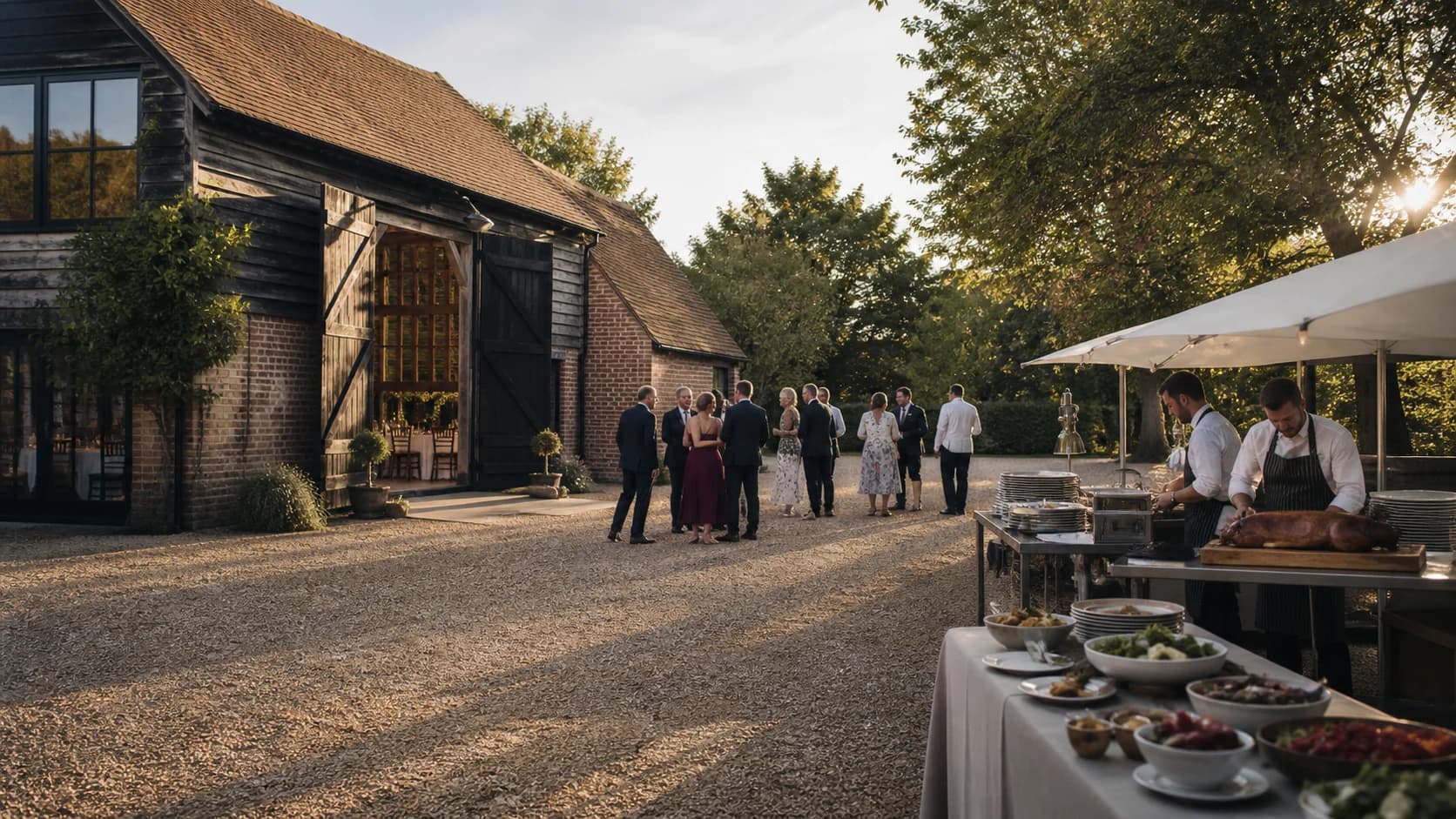
Couples planning a relaxed wedding usually want to know one thing about the catering: when does it stop being their problem. The answer is that it never really starts being their problem, but it helps to know what is going on. Here is a real timeline for a seven o'clock carve.
The night before — the bit that makes the crackling
The hog is prepared at base. The skin is scored in tight parallel lines, dry-salted hard, and then left uncovered overnight so the surface dries out properly. This is not a flourish. Wet skin steams instead of crisping, and no amount of heat on the day fixes it. If a caterer tells you they can produce good crackling from an animal prepped that morning, they are telling you something useful about their crackling.
11:30 — arrive and light
We are on site long before any of your guests. The gazebo goes up, the roaster is positioned, the fire is built and the hog goes on. From this point it is not left unattended for the next seven hours.
This is why access matters more than anything else on your venue checklist. A venue that cannot let us in until the middle of the afternoon cannot have a whole hog at seven, and we will tell you that before you book rather than after.
Through the afternoon — quietly getting on with it
- The burners are watched and adjusted through the cook, so the heat stays even
- The animal is turned periodically to render the fat evenly
- Salads, sauces, stuffing and apple sauce are prepped on site
- We stay out of the way of the photographer, the florist and the marquee crew
You will barely see us. That is deliberate — the day of a wedding is busy enough without a caterer needing decisions.
17:00 — sides out, tables dressed
Two hours before service the serving tables go up and get dressed, the sides come out, and if your package includes front-of-house they arrive now and get briefed on the room: where the top table is, who is speaking, which guests have allergies and where they are sitting.
19:00 — carving
Adam carves, someone else builds the bap, and the queue moves. A hundred and fifty guests are fed in about forty minutes without anybody feeling processed. Vegetarian, vegan and allergen plates are handed over separately, away from the main line, so nobody has to negotiate a buffet table with a serious allergy.
21:00 onwards — the board stays open
This is the part people do not expect. The carving board does not get packed away after service. It stays available, which covers the guests who arrived late, the ones who were having photographs taken, and the ones who want a second bap at nine o'clock. What is left becomes the late-evening round that stops a drinks reception turning into a taxi rank.
23:00 — gone
Leftovers boxed and left with you, our area cleared, our equipment loaded and every bag of our waste in the van. The pitch goes back the way we found it. Nobody in a wedding dress should be looking for a bin.
What we need from you, in total
- A level patch of ground about 5m by 3m, with a route a long-wheelbase van can reach
- Access from early morning — this is the non-negotiable one
- Permission from the venue for a gazebo and gas cooking outdoors
- Final numbers a fortnight out, and a heads-up on dietary requirements
Everything else — gas, generator, refrigeration, lighting, hand-washing, service equipment, waste — travels with us. A bare field is genuinely no harder for us than a fitted kitchen.
Written by Adam Skinner, who has cooked professionally for 30 years and is the one who turns up. Questions about any of this? Ask him directly or ring 07946 773421.